






- freebie
- |
- learning centers
- |
- Back to School
- |
- Centers
- |
- Fall
- |
- Themes
- |
- Social Emotional
- |
- Seasonal
Feelings Activities & Centers for Preschool, Pre-K, & Kindergarten
Share This Post:

Teaching feelings & emotions to little learners is so important and something you will spend a significant amount of time throughout the year. They don’t always know how to handle their big emotions, and you are their guide while they learn. I like to use these feelings activities & centers with my preschool, pre-k, or kindergarten students at the beginning of the year and then throughout the year when they need it.
Grab the Feelings & Emotions Unit for all the printables! Be sure to check out my other Social-Emotional Learning Units to use in your classroom.
Grab the FREEBIE by entering your email in the box at the bottom of this post. This post contains affiliate links, which means I earn a tiny commission when you use my links at no cost to you.
Parent Notes
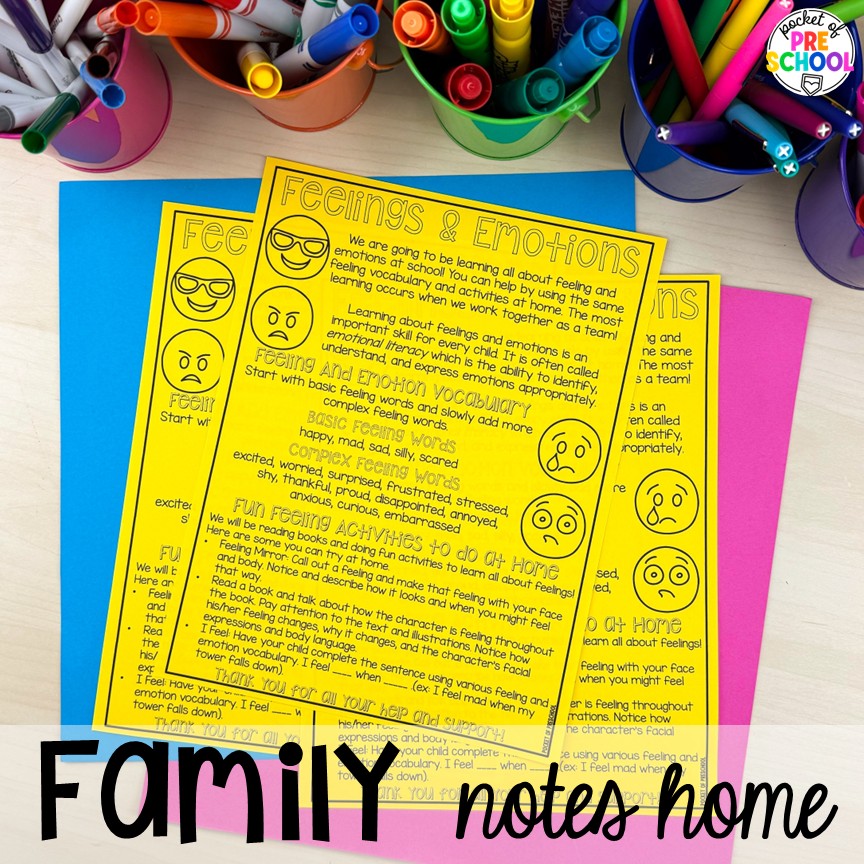
Family Notes Home! Use the included family notes to let everyone know how you are going to teach about feelings and emotions in the classroom. There are 3 versions in the unit, so you can find the one that best fits your needs. They give parents some fun ideas for how to extend learning at home with some social-emotional activities, too!
Feelings activities
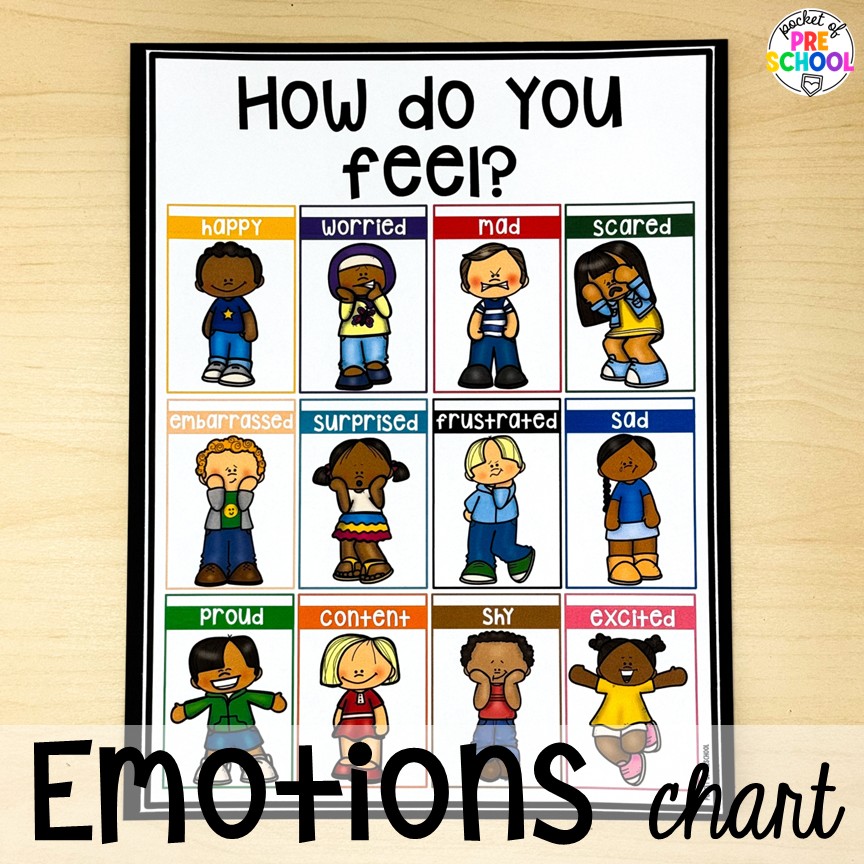
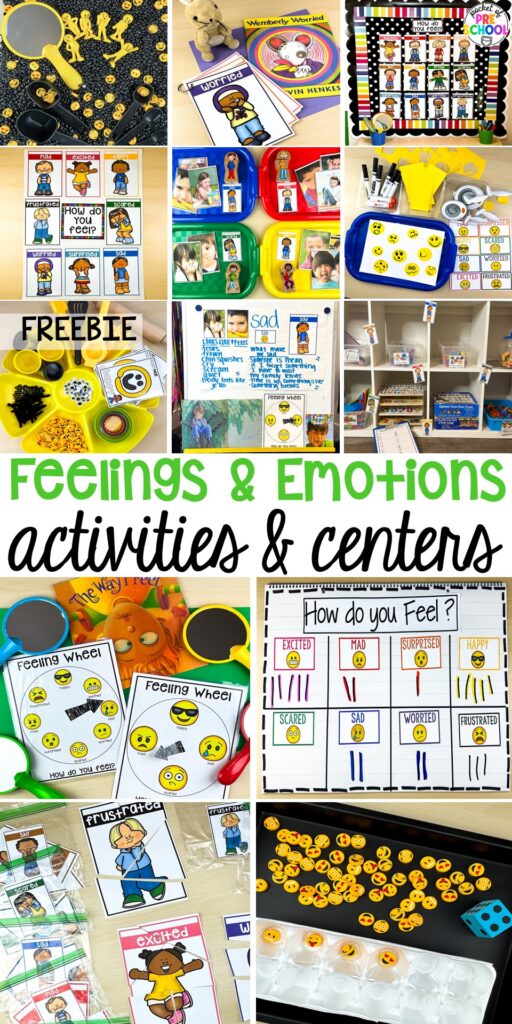
Emotions Chart! Create an emotions chart to use with students when they are feeling big emotions and don’t know how to label them. You can keep this in your safe place so students know where to find it when they are struggling with their feelings.
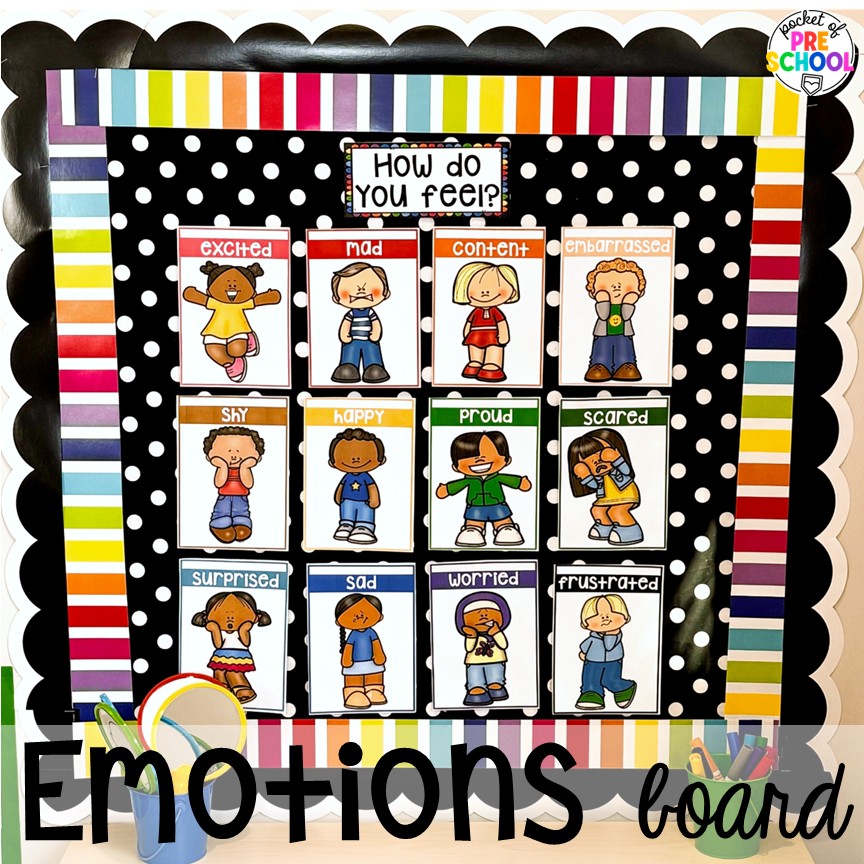
Emotions Board! Making an emotions board is a great way to teach children the names of emotions and have them presented in a clear and easy-to-read way for students. This bulletin board facilitated my students in having lots of great conversations about their emotions while working on social skills and emotional intelligence in a healthy way.
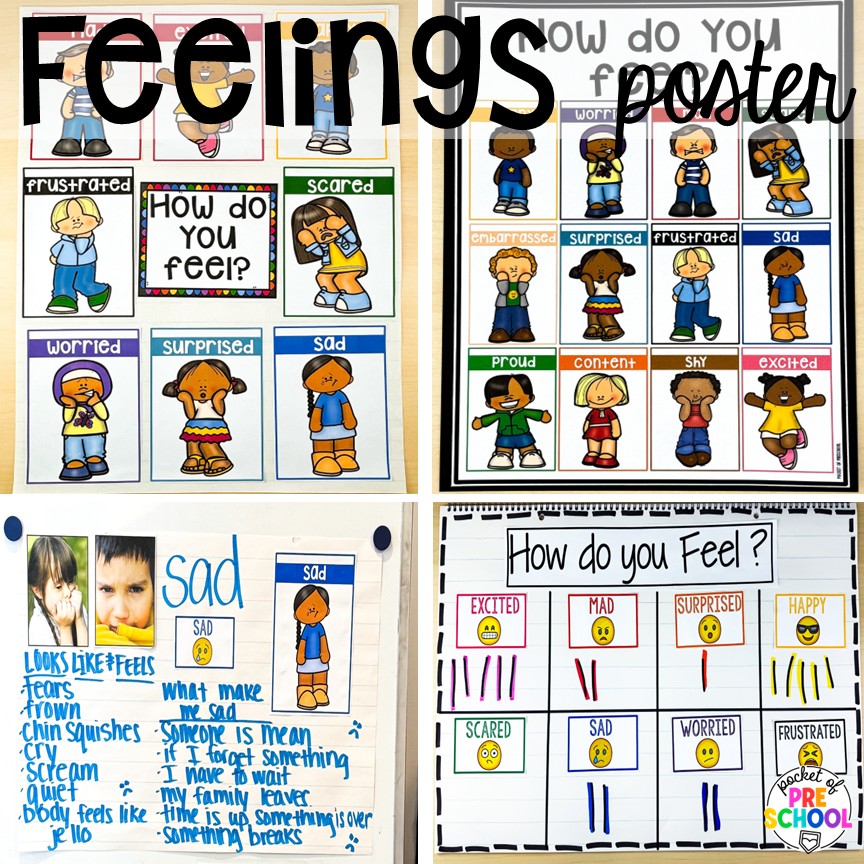
Feelings Posters! There are several different feelings posters you can create with your students! All the printables are included in the Feelings Unit. I like the variety because one may work better one year and another may work better the next. Social-emotional development is one of the most important skills that students may leave you with, so I wanted to have several options available.

Safe Place! I always have the feelings posted in my safe place. I also have the feelings wheel there, too, for students to use to express their big emotions. It can also be used to help students understand the feelings of others while we work in a small group to use problem solving techniques during a classroom disagreement. You can find the calm down printables here and the problem solving printables here. You can read more about my safe place in this blog post.
Feelings activities for Literacy practice
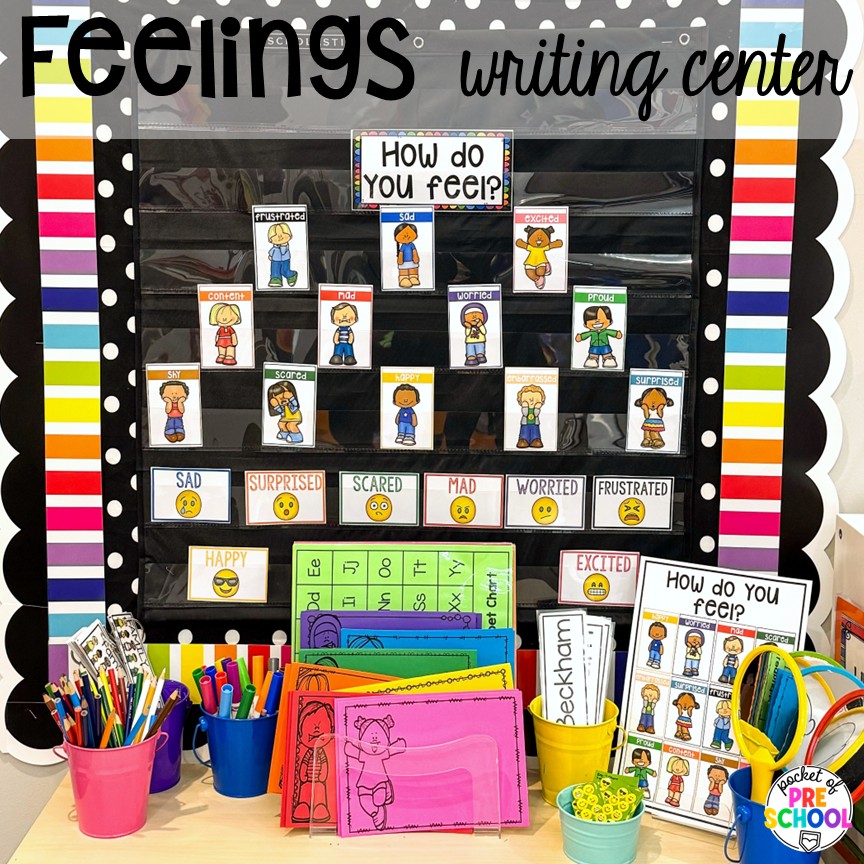
Feelings Writing Center! Use the feelings vocabulary cards to create an emotions writing center. Students can practice letter formation while identifying emotions. I also included writing utensils, fun themed paper (included), name cards, emoji stickers, and unbreakable mirrors so students can look at their faces while they talk about the feelings.
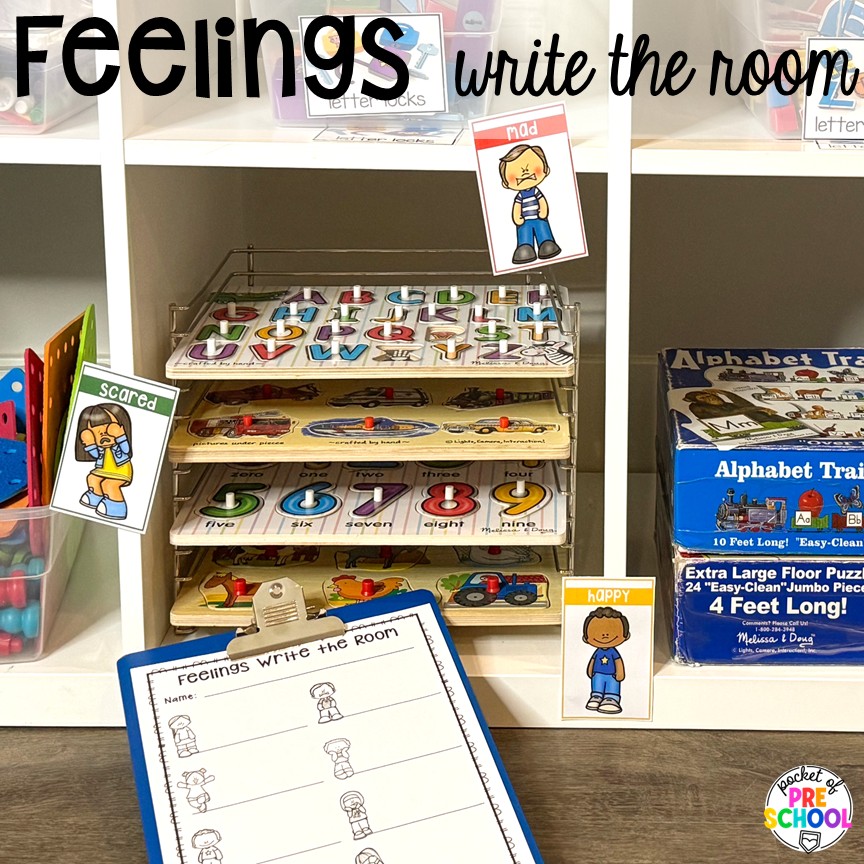
Feelings Write the Room! Tape the feelings cards around the room and give students a clipboard and a worksheet. Students will walk around the classroom. When they find a feelings card, they identify it and write it on their paper. I love write the room activities for getting out those extra wiggles!
Fine Motor, Art, & Sensory Feelings Activities
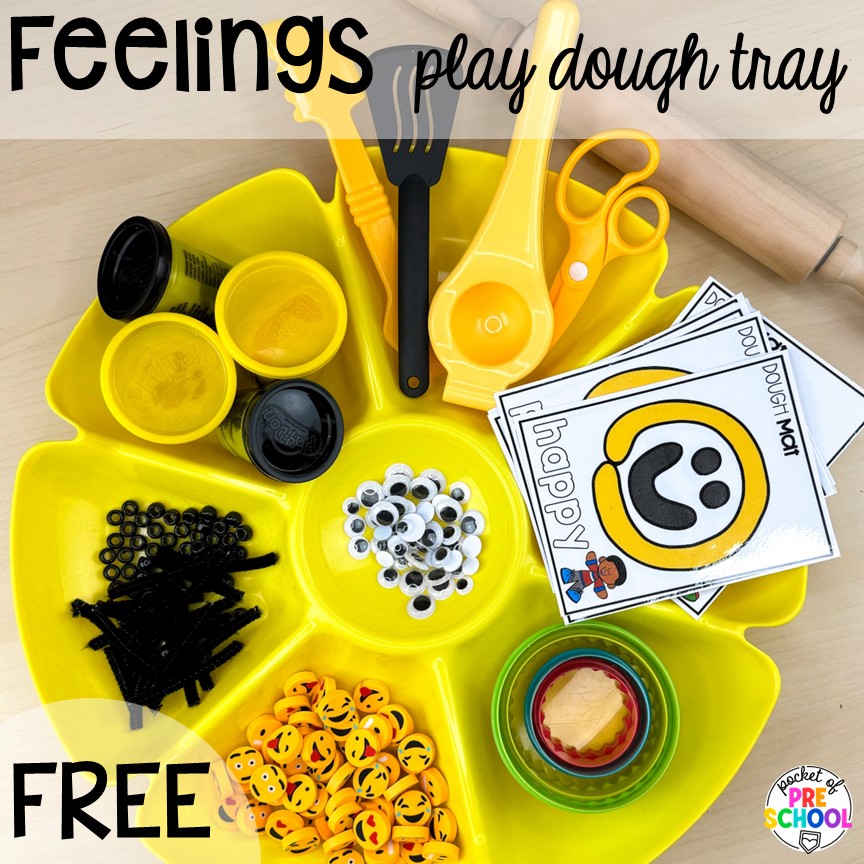
Feelings Play Dough Tray! I created a fun feelings play dough tray by placing play dough, black pony beads, cup up pipe cleaners, mini erasers, googly eyes, play dough tools, and circle cookie cutters. I also added the feelings dough mats to give students ideas for what to create.
>>Grab the feelings dough mat freebie by filling in the box at the bottom of the post!<<
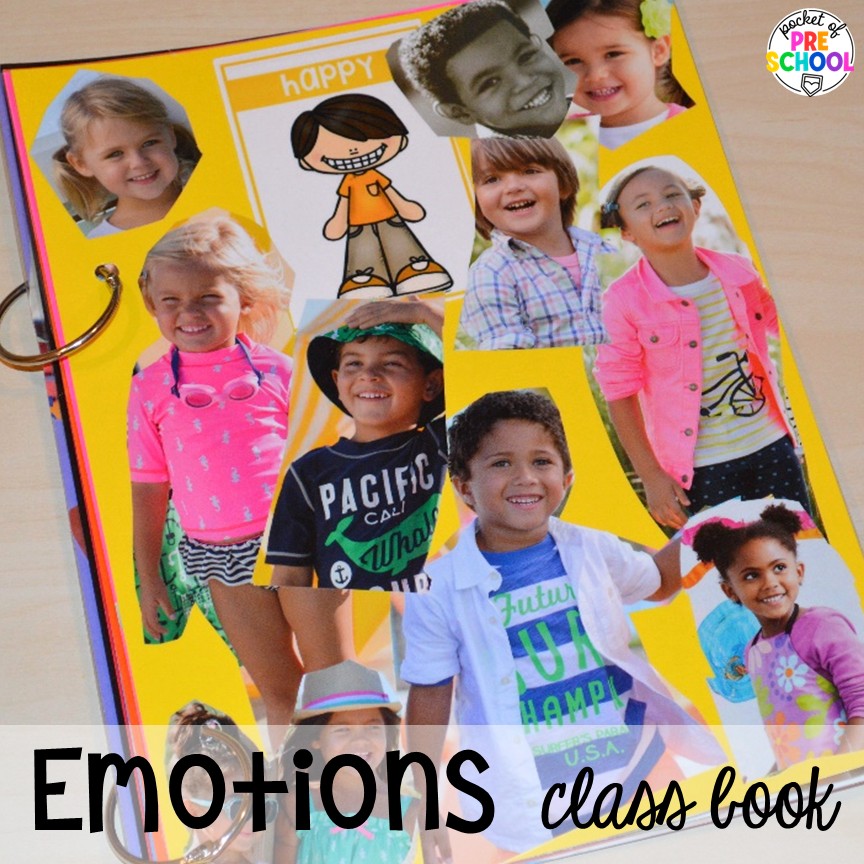
Emotions Class Book! Create an emotions class book by having students cut out pictures from magazines of different emotions. We then glued them onto a piece of cardstock with the feelings card to identify it.
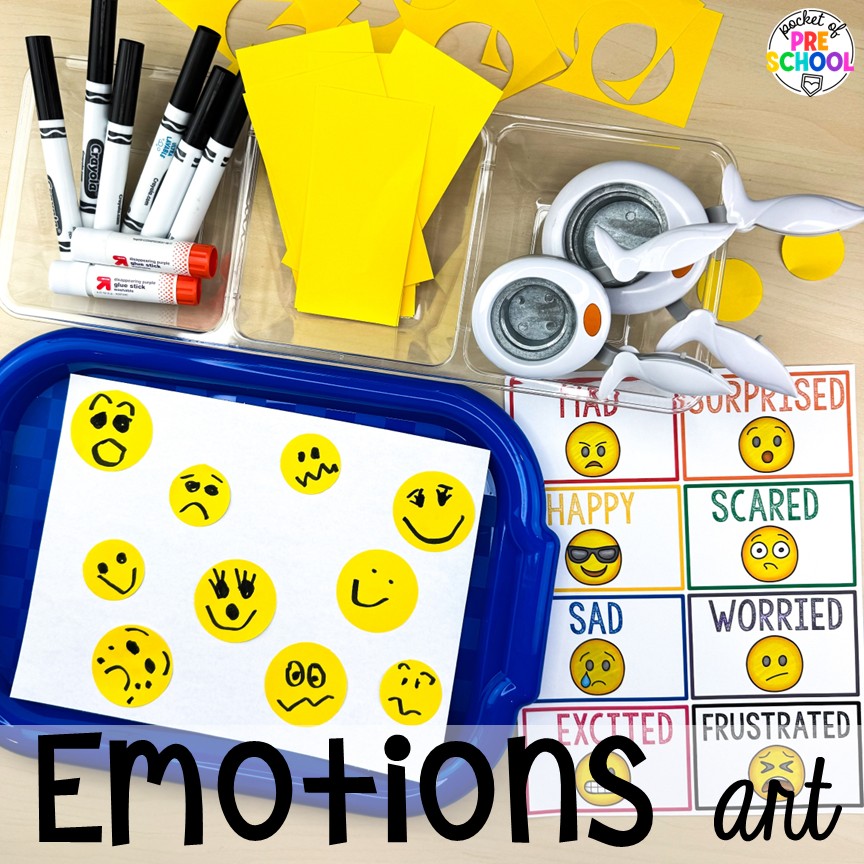
Emotions Art! This simple, open-ended emotions art project is great for the beginning of the year since it doesn’t require a lot of materials and directions. Beforehand, cut yellow paper into squares. Students use the paper punches to punch out circles from the yellow squares. Then they glue them onto their paper and draw a face. I like to have the emotions poster out so students can look at different faces for ideas.
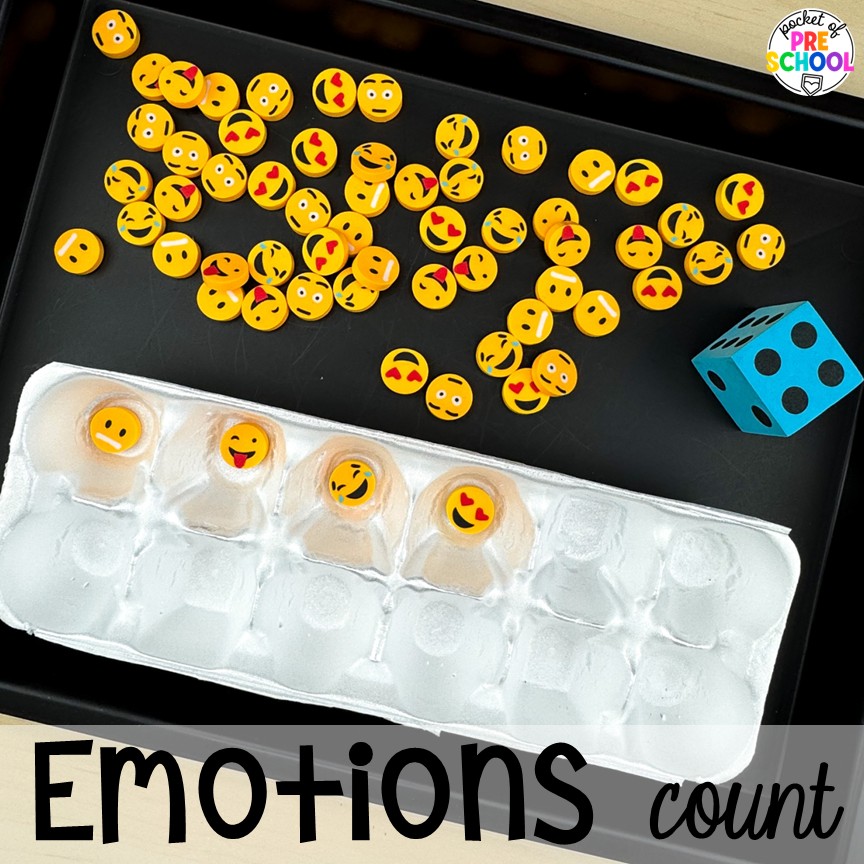
Emotions Count! Grab an egg carton, dice, and mini erasers or other emotion manipulatives to create a fun counting game. This is wonderful for practicing one-to-one correspondence and counting skills. Students roll the die and put that many manipulatives into the tray. Make it harder by giving them 2 dice and have them practice informal addition skills.
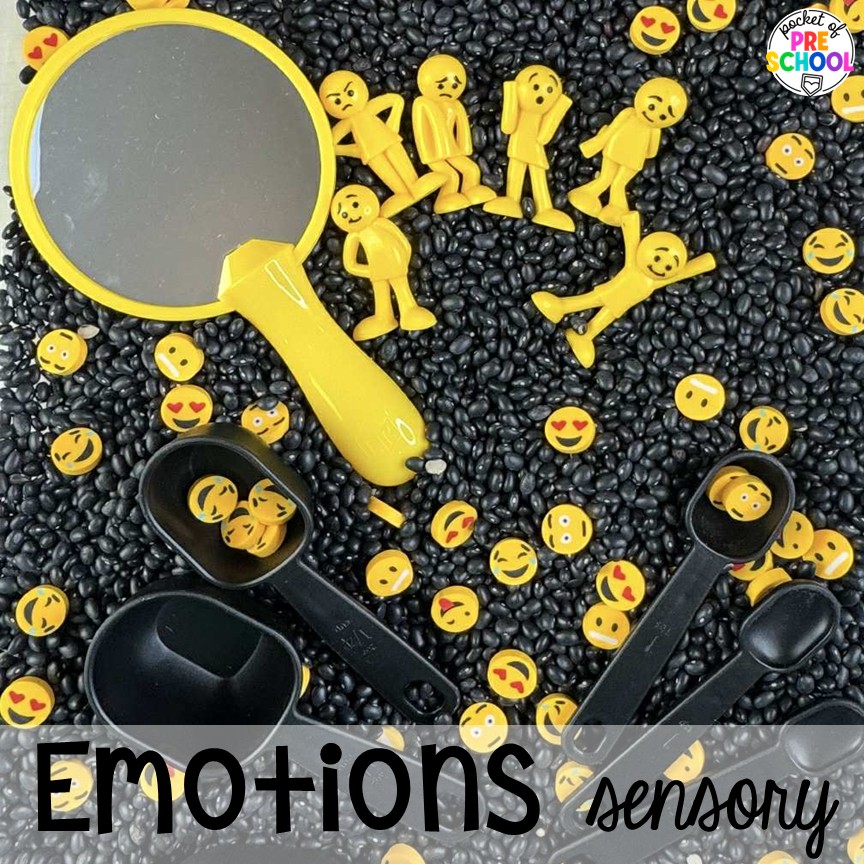
Emotions Sensory Bin! The sensory bin is a base of black beans, then I added mini erasers and emotion people for tiny treasures. Finally, I added measuring scoops, and a hand mirror for students to explore feelings.
Feelings Activities for Circle Time
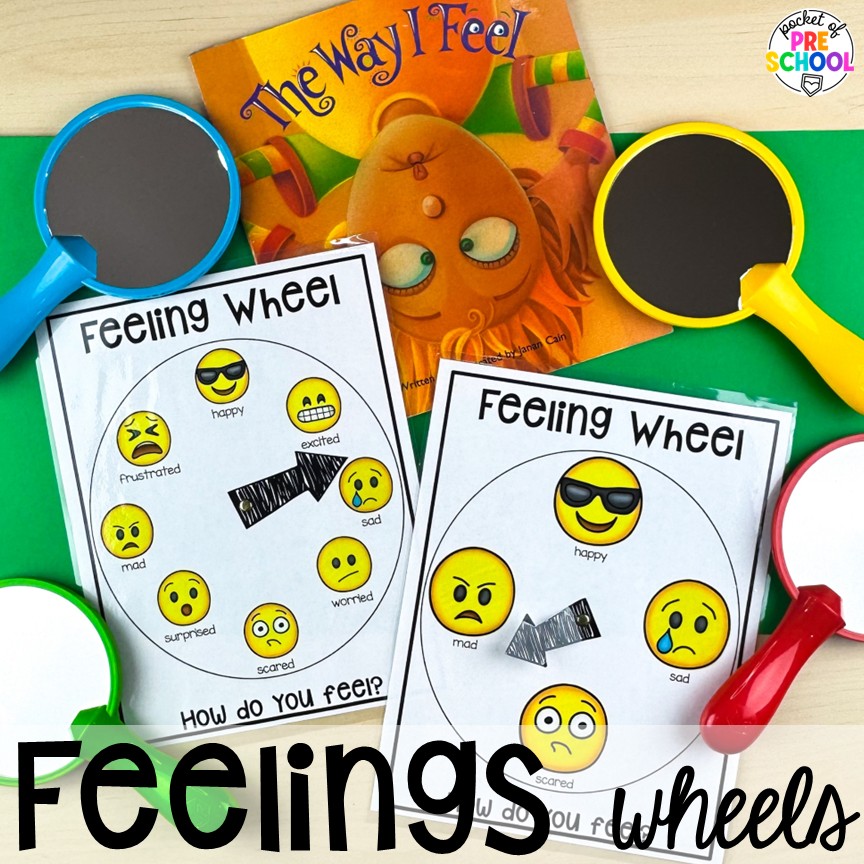
Feelings Wheels! There are 2 feeling wheels included in the pack: one for the beginning of the year and another for when they have more of an understanding of emotions. The simple one has a happy, mad, scared, and sad face for the basic emotions. The more complex one has a scared, surprised, mad, frustrated, sad, excited, worried, and happy face. These are great in your safe place, but I also use them at circle time during this read aloud. Students can turn the arrow while I read the book for a fun way to stay engaged.

Feelings Wheel in Action! You can see the feelings wheel in action in the safe place. Students can move the arrow to show how they are feeling when they are struggling to name their emotion. I like to use the feelings wheel to help with emotional expression when they are having big feelings and may be unable to communicate effectively with words.
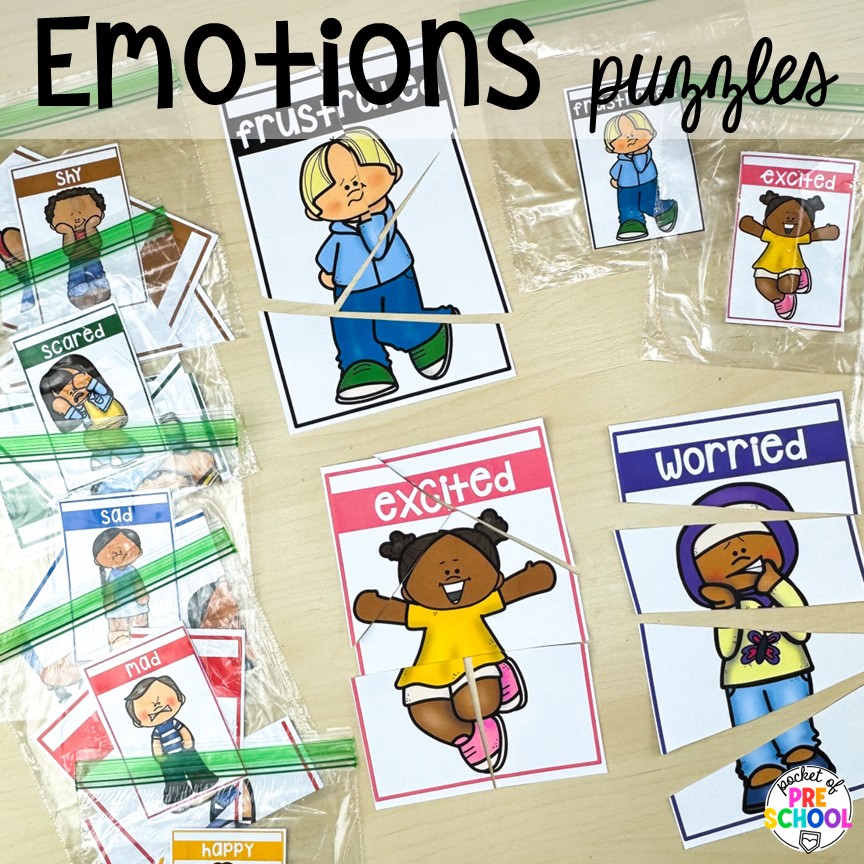
Emotions Puzzles! Create your own puzzles by cutting up the feelings vocabulary cards included in the unit. I print one smaller and tape it to the bag so students know what the final picture should be. I like to cut mine all different, but you could make them all the same, if your students need that.
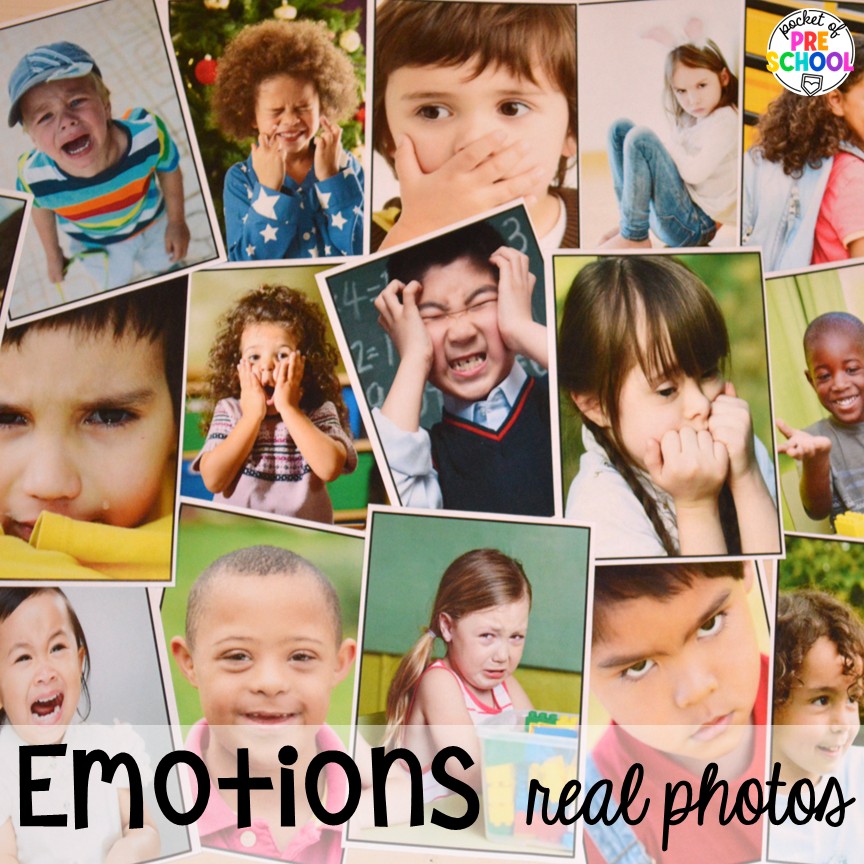
Emotions Real Photos! I like to give students real images of the emotions we are talking about, not just clip art. This allows students to see a wide range of emotions and see them displayed on different genders and ethnicities. I believe this is a powerful tool to help foster a child’s emotional development in the preschool years and beyond. People can display big feelings in many different ways, and I want students to have emotional awareness.
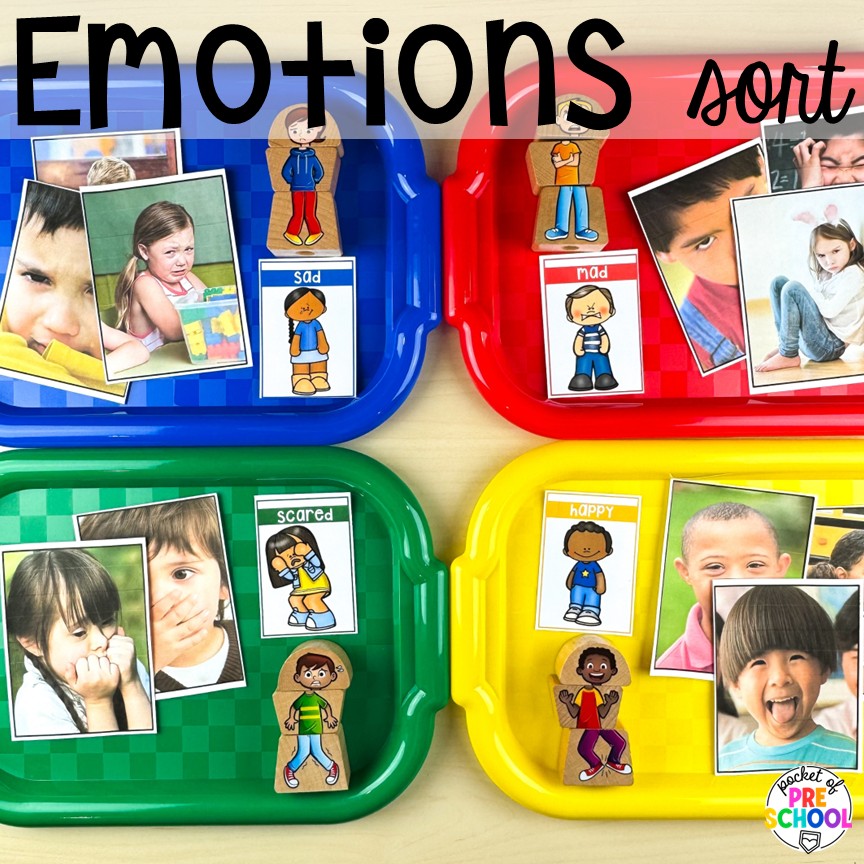
Emotions Sort! Use the many different emotions and feelings printables in the pack to do a feelings sort. My students love to do this activity and talk about how it looks different and the same in the pictures. I also love these emotions puzzles for another sorting option.
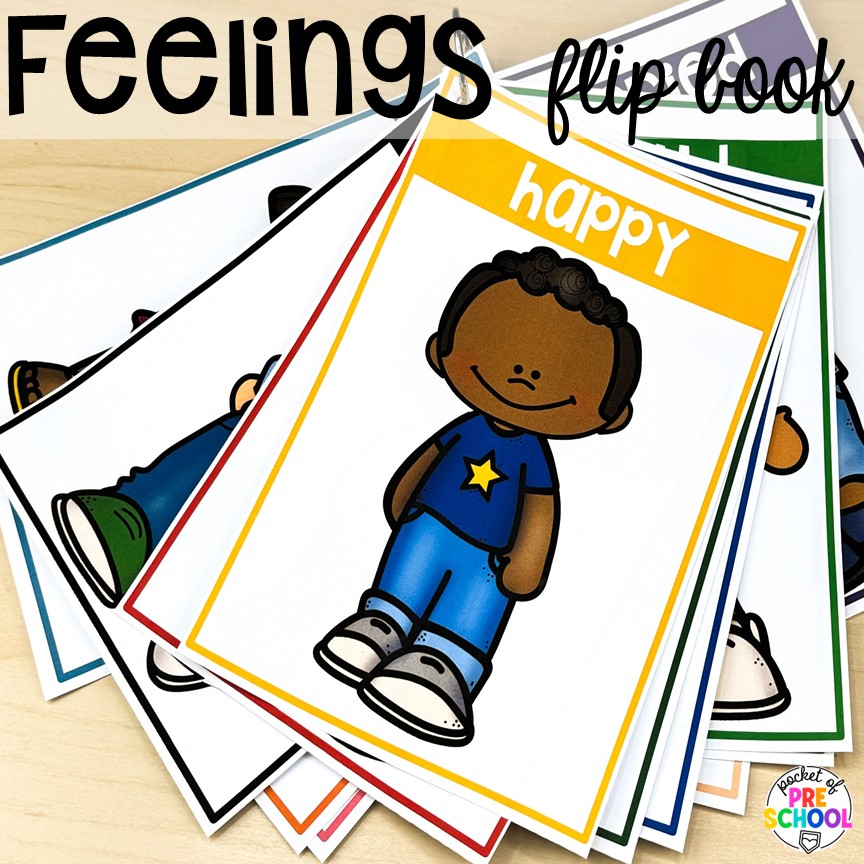
Feelings Flip Book! Turn the feelings cards into a flip book for students to look at during circle time or to wear around your neck for when students need help identifying their emotions on the go. I printed and laminated the cards and cut them out. Then, I used a hole punch to put a hole through the corners. Lastly, I put them all together with a book ring.
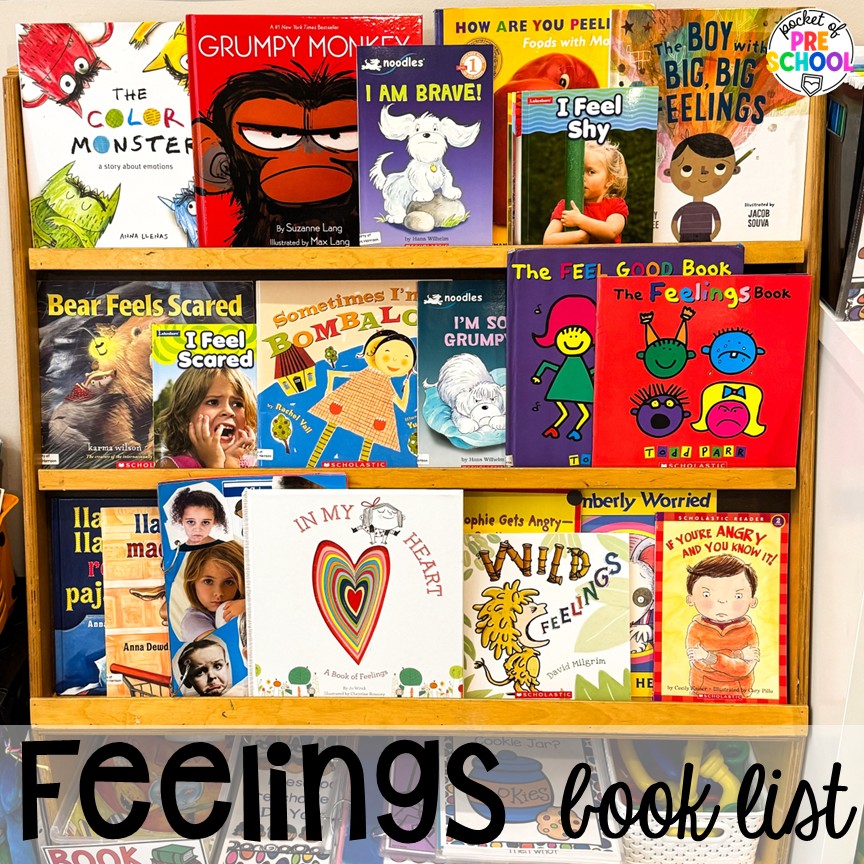
Feelings Book List! I rounded up my favorite books that I use during my feelings unit. My students love these titles, and I am able to make great connections about feelings and emotions with them. There are great books in nonfiction and fiction titles, too.

Emotions Anchor Chart! I used some of the feelings printables to create an anchor chart with my students during our circle time. We read a couple of books about being sad and then created the anchor chart together. We talked about how the emotion could look and feel like in our bodies (body language) and then things that could cause us to feel that way.
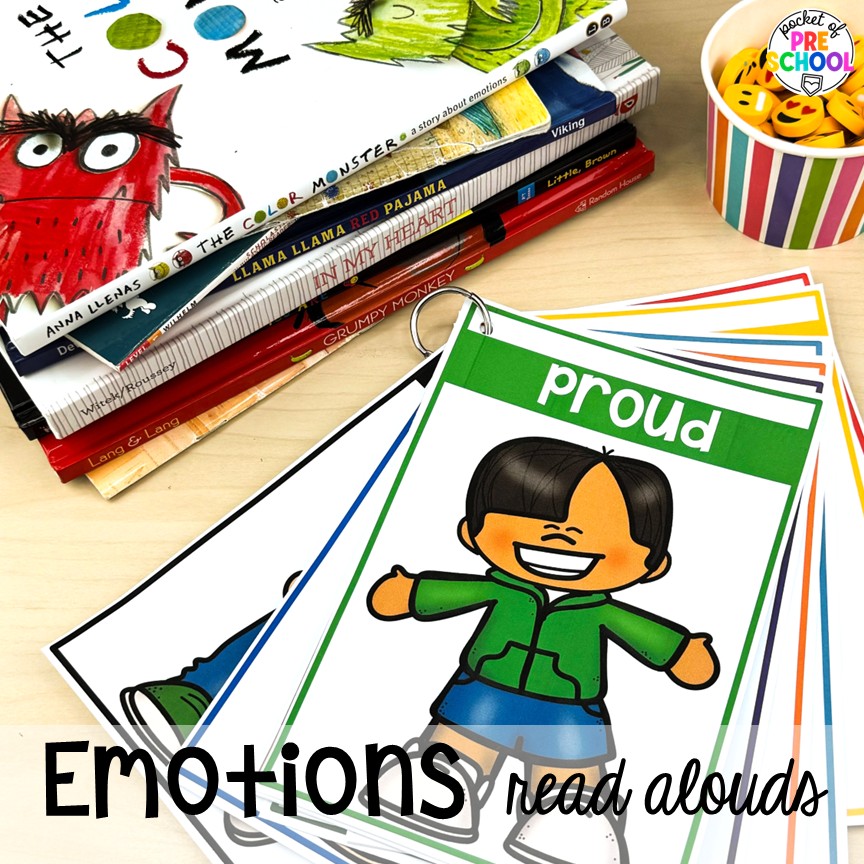
Emotions Read Alouds! If my students are struggling with how to handle an emotion, I use my read alouds throughout the year to teach and remind students how to handle big emotions and what that may look like in different environments. If I have a student who is struggling with anger/temper, I point out that emotion in the characters, and we talk about whether the character handled it well or not. It is a whole class teaching moment, and I don’t call out the child specifically.
Teaching emotions/feelings is so important and beneficial for students and the classroom environment. Taking time at the beginning of the year has always worked best for me, so students can start off knowing and understanding some of the basic emotions. Then we work on the more complex ones throughout the year. I usually do a short reteaching phase after winter break as well. I have found this to be beneficial for everyone. These feelings activities are some of my favorite and I hope they come in handy in your classroom too!
Grab all the printable feelings activities here!
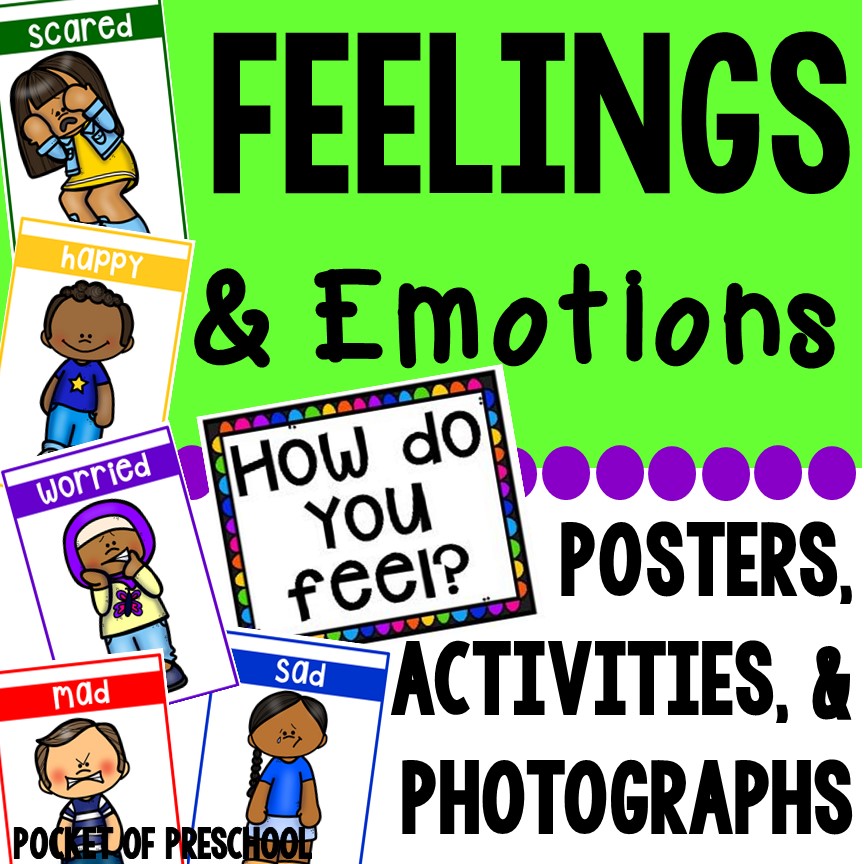
Need another feelings activity? Check out these free feelings monster cards!
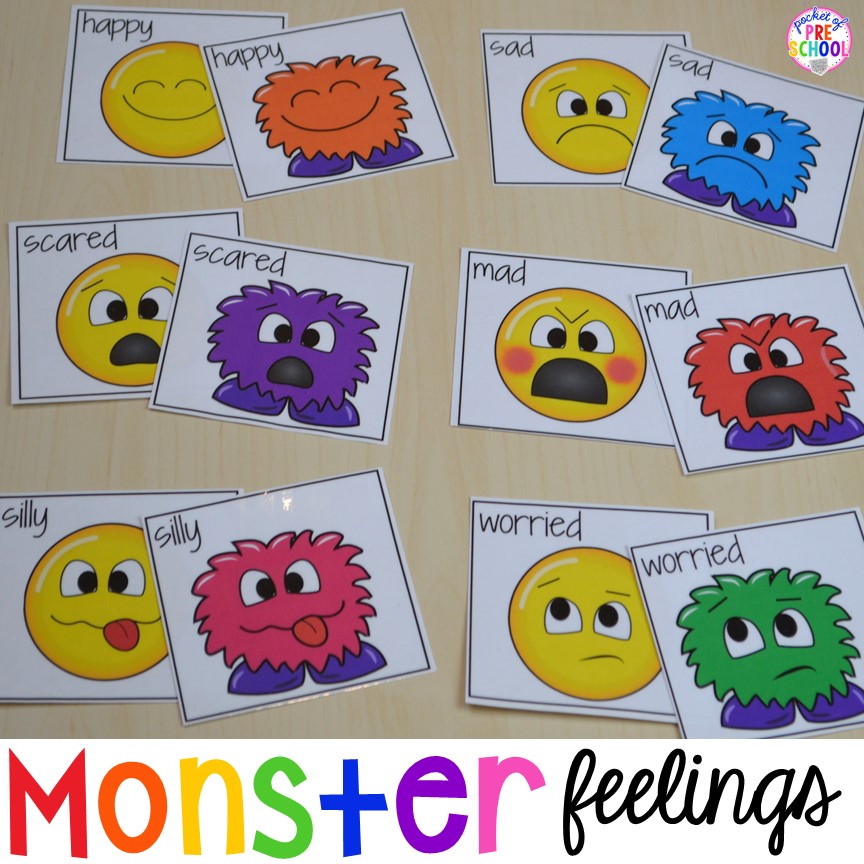
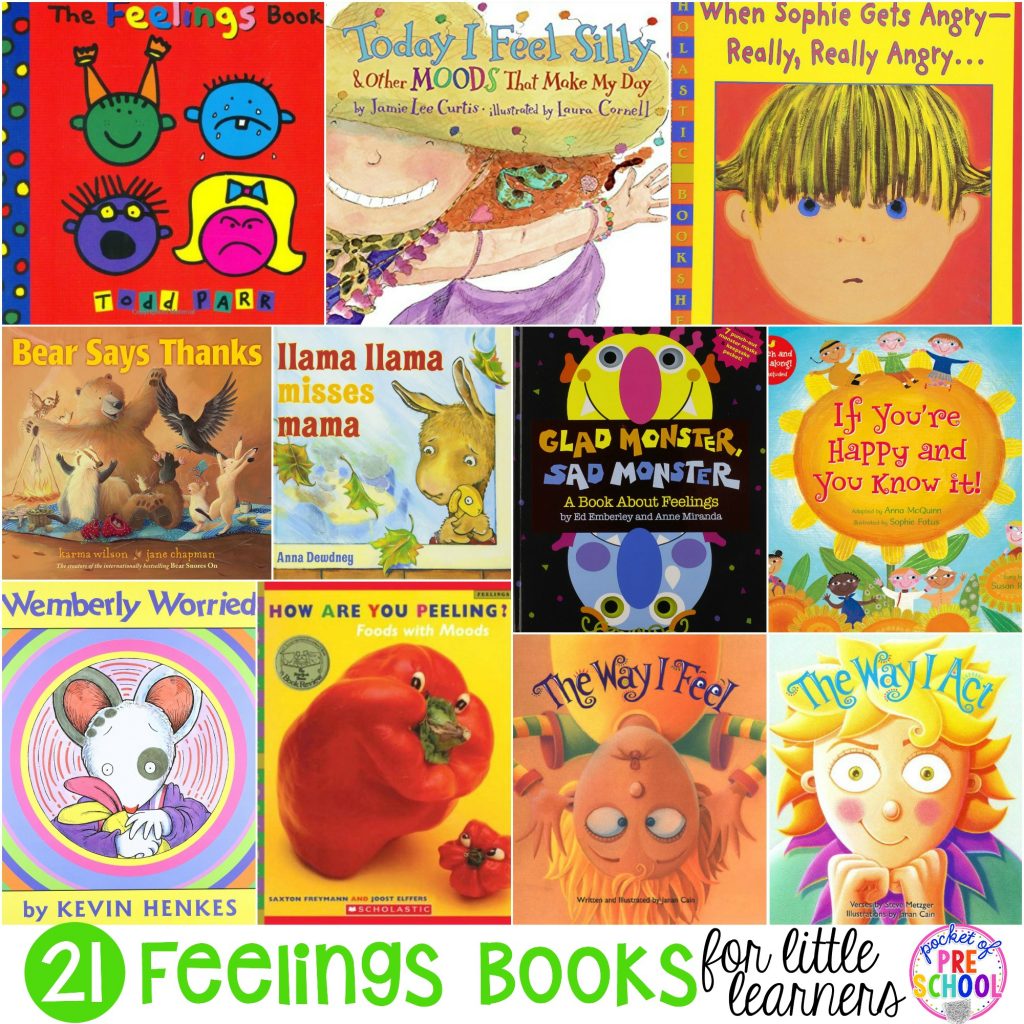
Don’t forget to fill in the box below for your feelings dough mats FREEBIE!
Watch this video to see the feelings activities in action!
Love these feelings activities? Pin this image!
hey, i’m jackie!
I’m Jackie, your go-to girl for early childhood inspiration and research-based curriculum.