




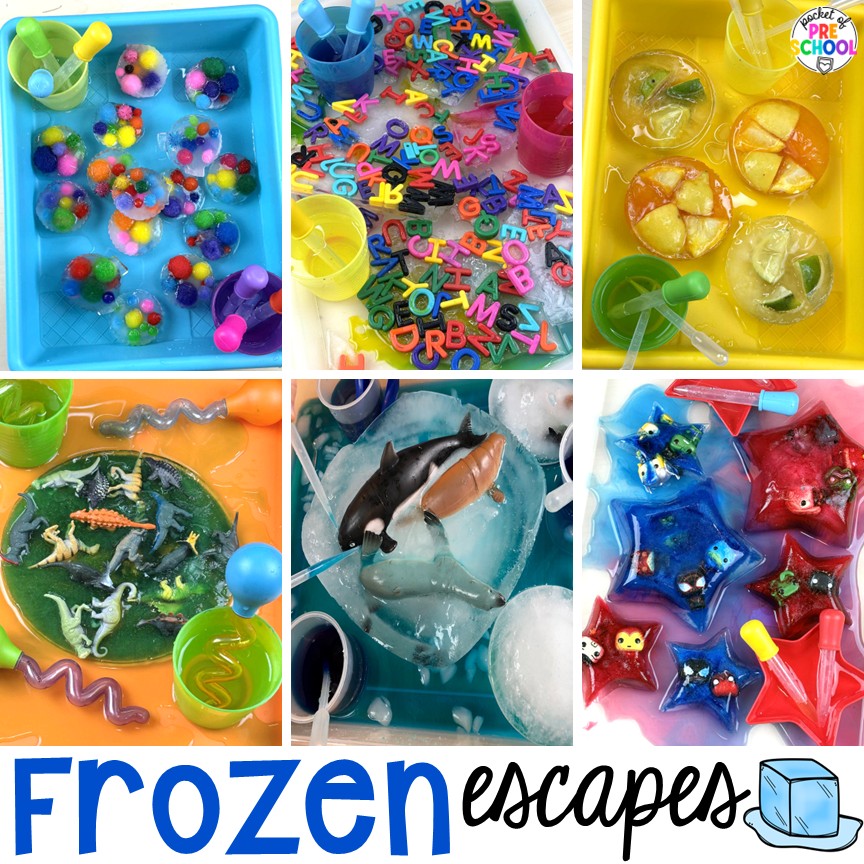
Frozen escapes…you might be wondering what they are and how they can be used in the classroom. Well, I am here to tell you that frozen escapes absolutely can be used in the classroom, and they are educational! They are an easy sensory exploration to add to your rotation and can be made to fit your themes or educational goals.
Grab the Sensory Activity Guide for over 200 sensory ideas and recipes made easy! There are pictures and teacher directions included, along with themes and sensory bins!
This post contains affiliate links which means I earn a tiny commission when you use my links at no cost to you.
All About Frozen Escapes
Frozen escape activities are when you freeze toys or manipulatives in bowls or trays of water. Then students have to use tools and water to get it out (help it escape)! These sensory activities help students increase their attention span, take initiative, and develop problem-solving & fine motor skills. Add in more educational objectives like color-mixing, temperature, & states of matter.
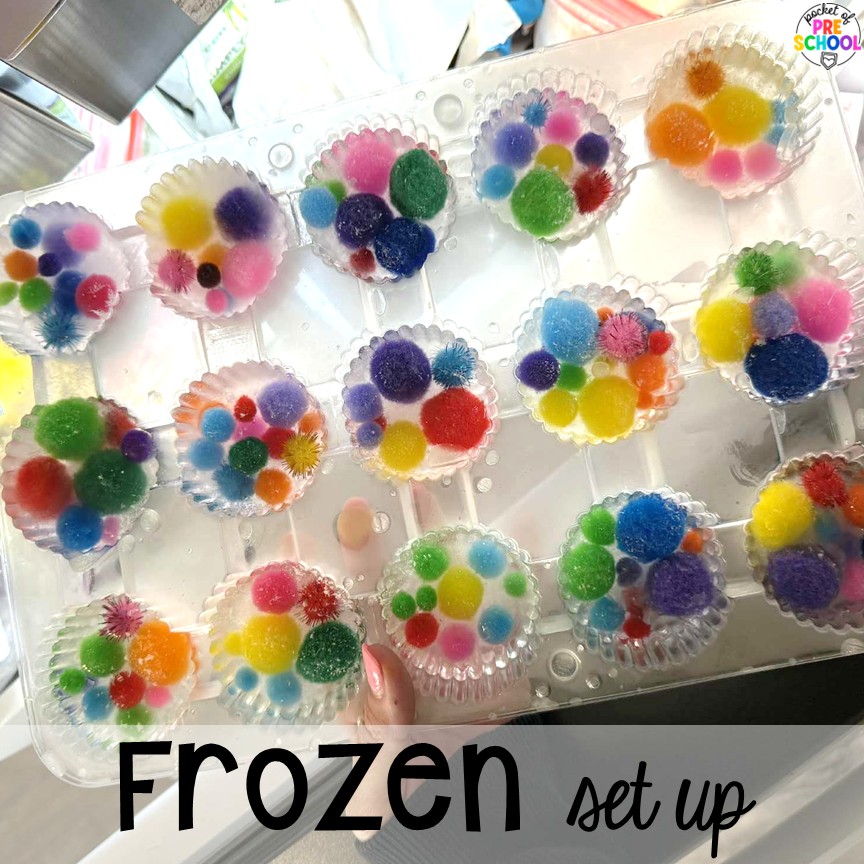
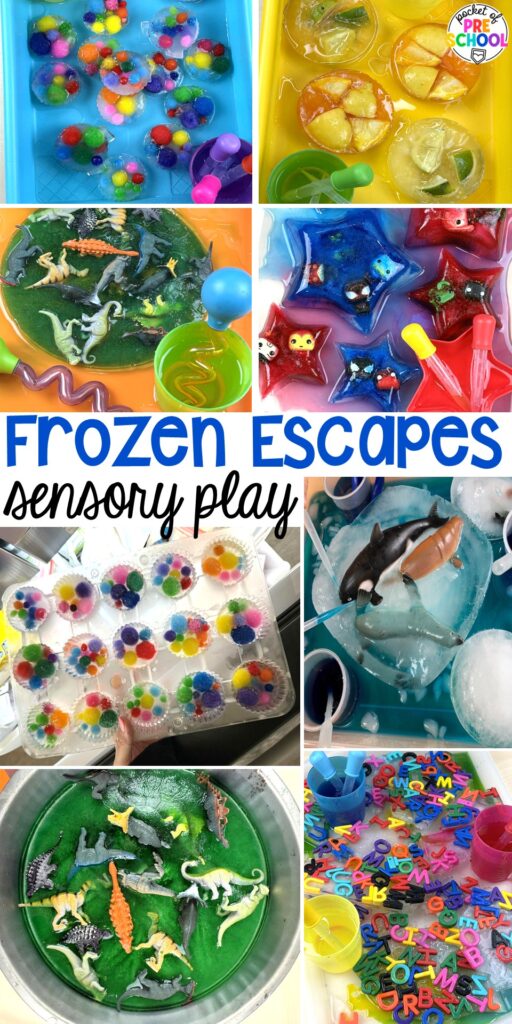
Pick Your Container! You can use all different kinds of shaped containers to make your ice cubes in. I even used plastic to-go containers like the cupcake tray pictured above. Add food coloring or liquid watercolor to make the water different colors.
- Bowls (various sizes and shapes)
- Ice cube tray (traditional or fun-shaped trays)
- Muffin tins
- Cupcake tray (pictured above)
- Baking pans
- Silicone containers
Add Your Manipulatives! You can freeze all sorts of fun manipulatives in the ice! As long as it won’t get ruined by the moisture like paper products, the sky is the limit!
- Animals (bugs, safari, farm, dinosaurs, zoo, sea animals, etc.)
- Superheroes or dolls
- Vehicles, tires, or tools
- Items from nature like leaves, pieces of wood, rocks, or fake flowers
- Counters
- Letter or number manipulatives
- Fruits or veggies
- Beads
- Small toys
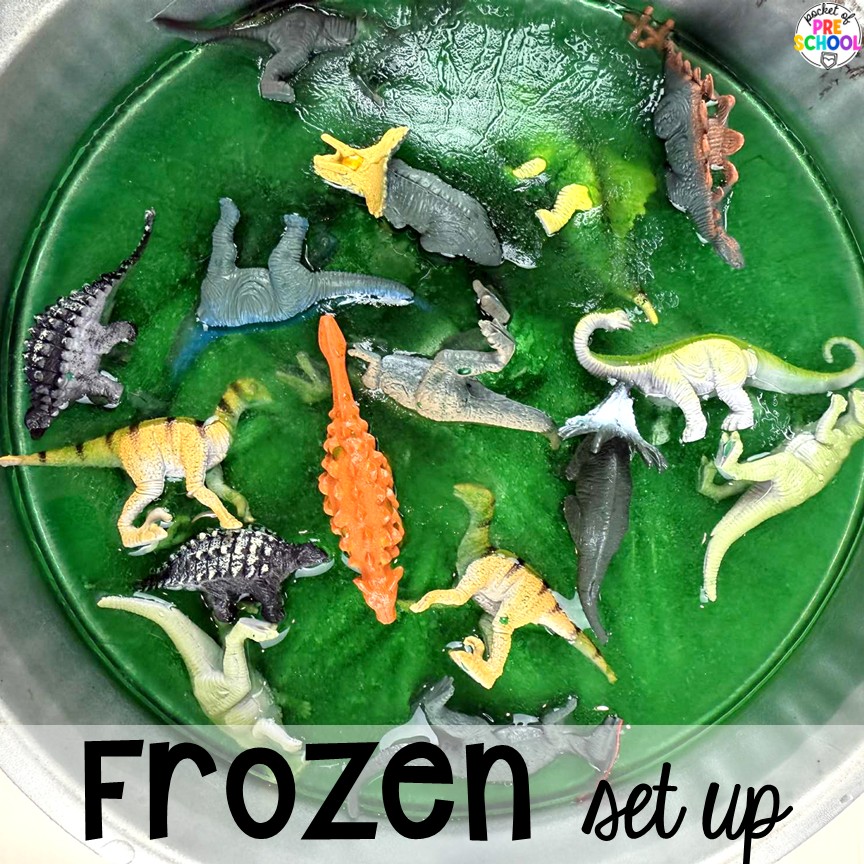
How to Escape! There are 2 ways that students can help the items escape the icy block!
- Water: Students use cold or warm water with a pipette, dropper, or turkey baster to get the object out.
- Tools: Students use water and tools to get it out. You pick a tool that is appropriate for your students to use. Tweezers are a tool that works well for this activity!
Types of Frozen Escapes
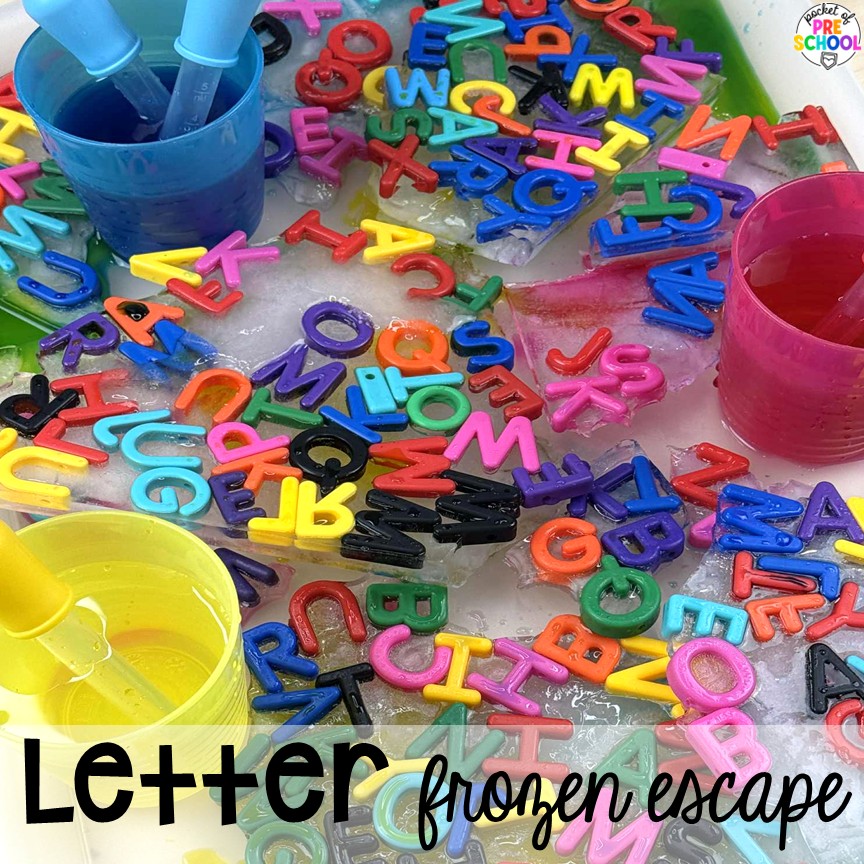
Letter Escape! Place letter beads on a tray, fill with water, and freeze. Place on a large tray with colored water and droppers. Students can try to free certain letters, like the ones to spell their name, or just allow them to talk and practice letter recognition as they play. They will have so much fun working together to complete this ice play simple activity.
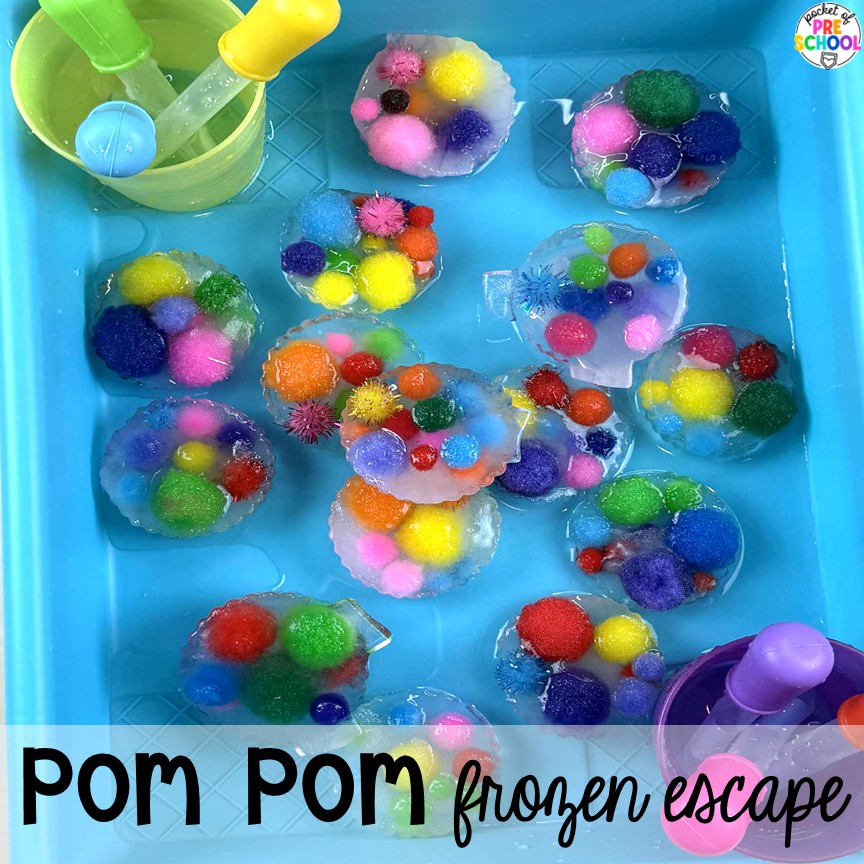
Pom Pom Escape! Place pom poms in a cupcake pan, fill with water, and freeze. Place on a tray with a little container of water and droppers. You can dry your pom poms and use them again. Collect them in a strainer, squeeze out as much liquid as possible, and let them air dry, or place them in a pillowcase and tie it closed; then toss it in a clothes dryer.
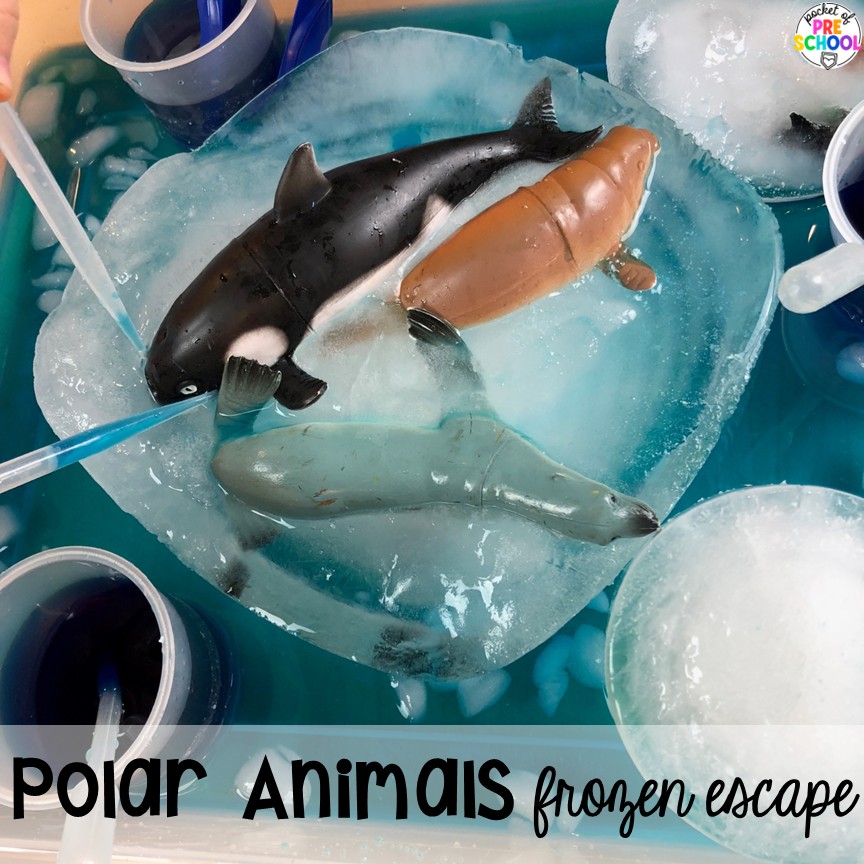
Polar Animal Escape! Place polar animals in large bowls of water and freeze. A small amount of teal water was added to the sensory water table with the cubes of ice and icebergs to make it look like the Arctic! Students can use cups of colored water and pipettes to help melt the ice and free the animals.
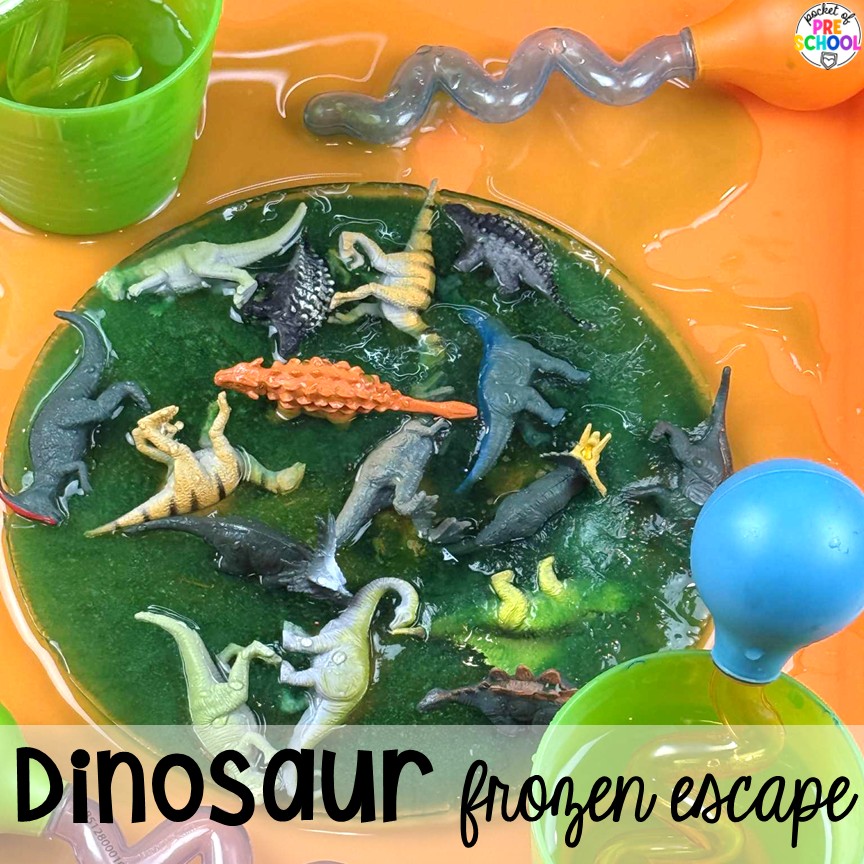
Dinosaur Escape! Start by placing dinosaurs in circle cake pans. Add green color to the water and freeze. Place on a tray with droppers and cups of water for the students to help the dinosaurs escape! Give young kids different kinds of droppers to make it new each time.
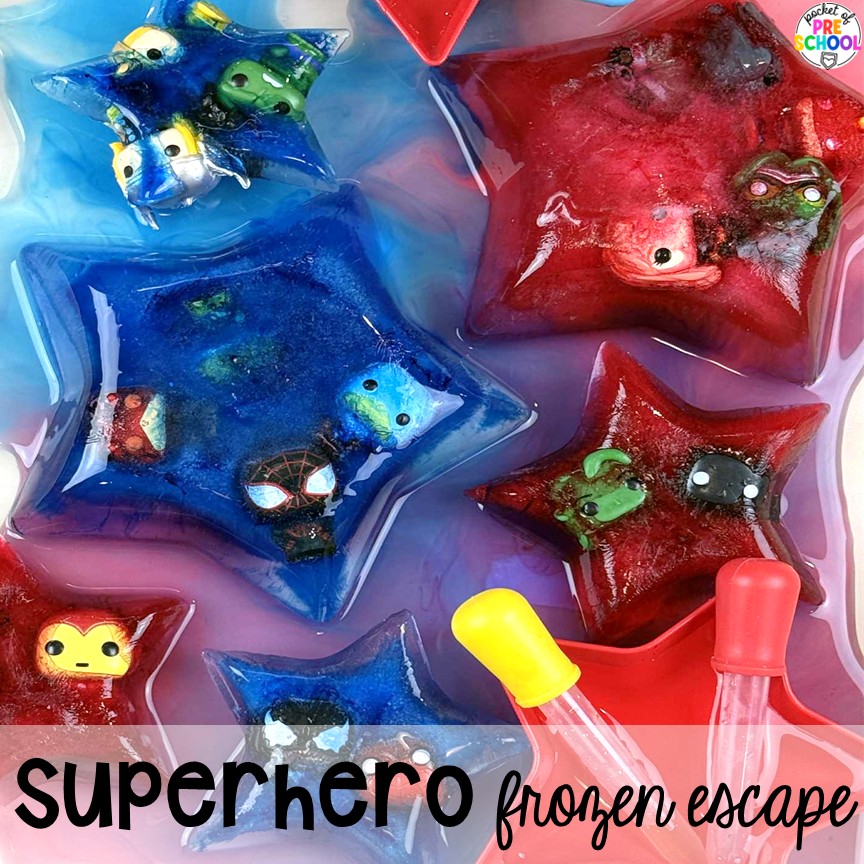
Superhero Escape! Place superhero figures in star-shaped bowls or trays. Add red and blue colors to the water and freeze. Place on a tray with plain water and droppers. Students will also be exploring color mixing as the ice melts.
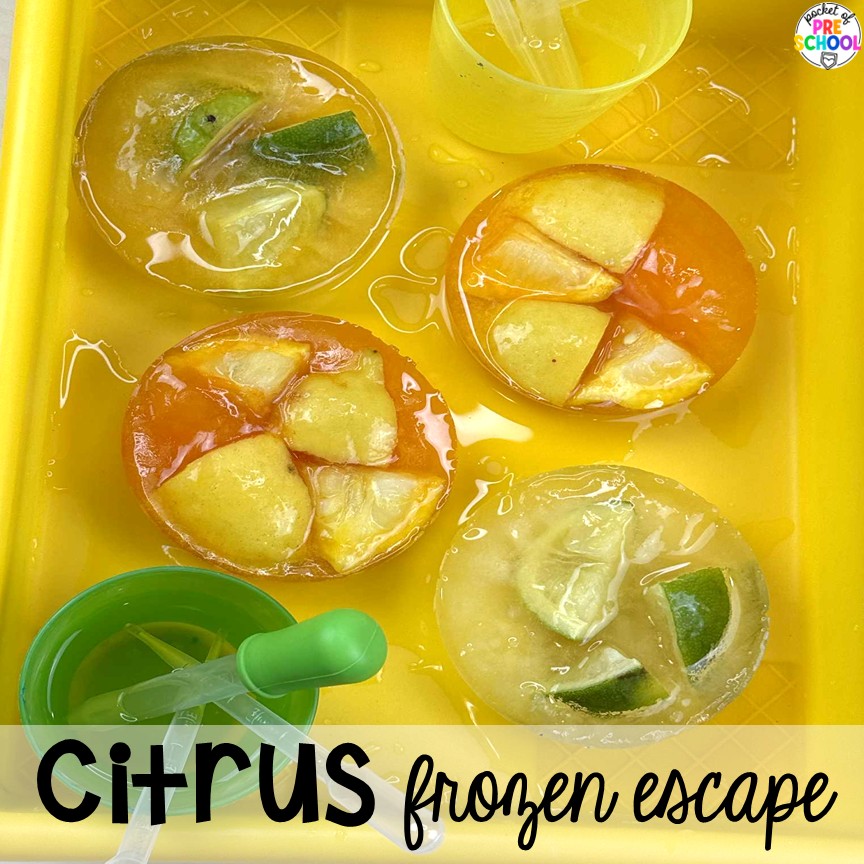
Lemon and Lime Escape! Place cut-up lemons and limes in bowls. Add yellow and orange colors to the water and freeze. Place in a tray with cups of plain water and droppers. Students can explore their sense of smell as the fruit thaws and oils are released.
Frozen escapes can be an interesting way to put science observations and vocabulary in the sensory area! They are always a big hit with young kids! Students will be exploring temperature, states of matter, and color mixing while they work to help the items escape the icy fortress. I like to add these into the sensory area all year, not just in the summer months. Since they are simple to make and easy to adapt to your theme, try some today! Get more sensory ideas for slime, how to dye sensory fillers, sensory bottles, the sensory table, and more in the Sensory Activity Guide!

Check out these other amazing sensory play activities for your classroom!
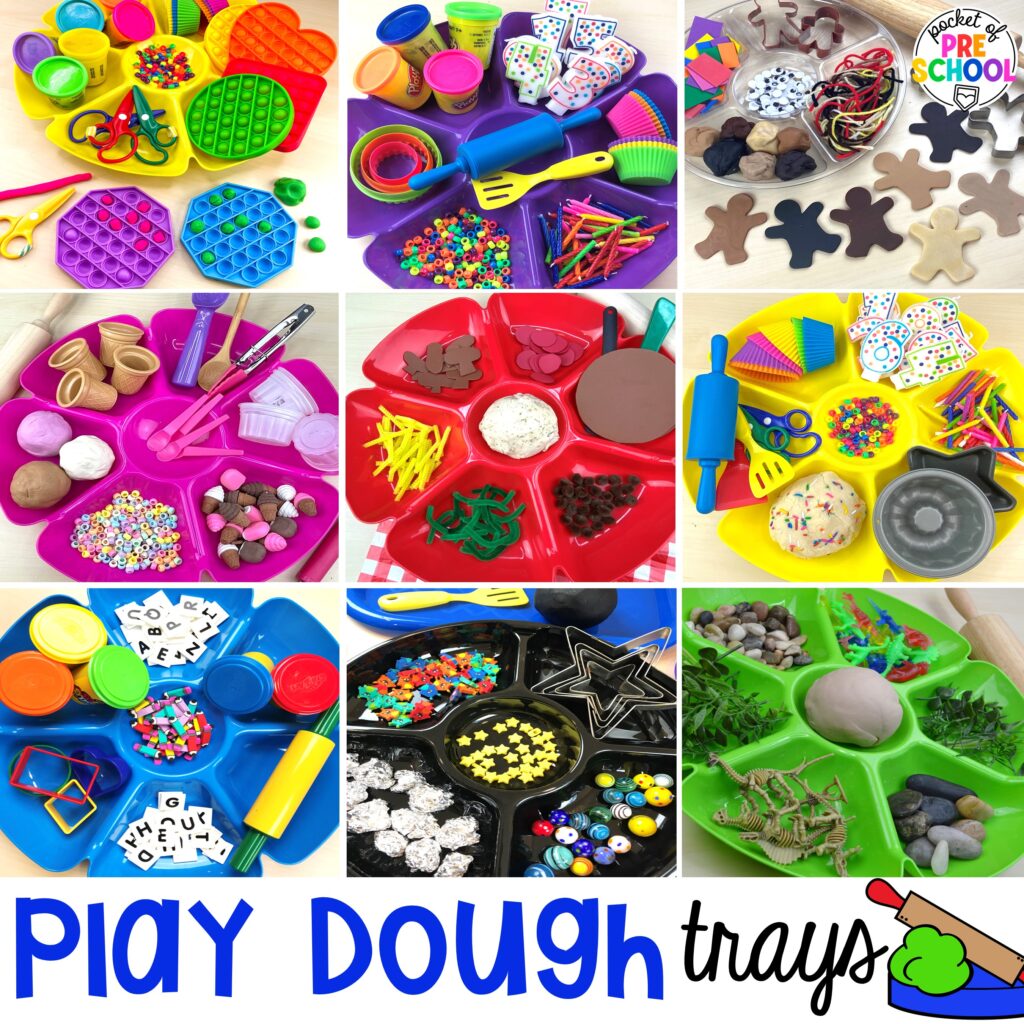
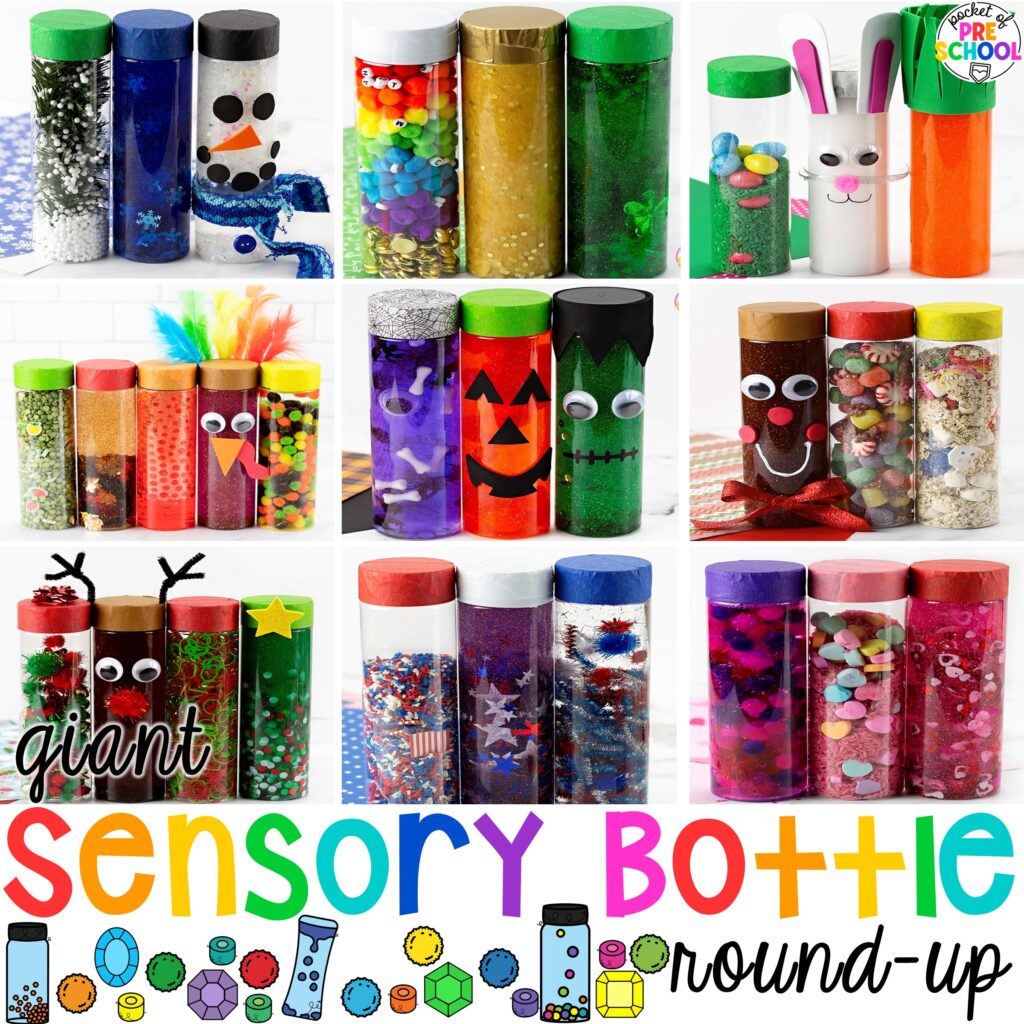
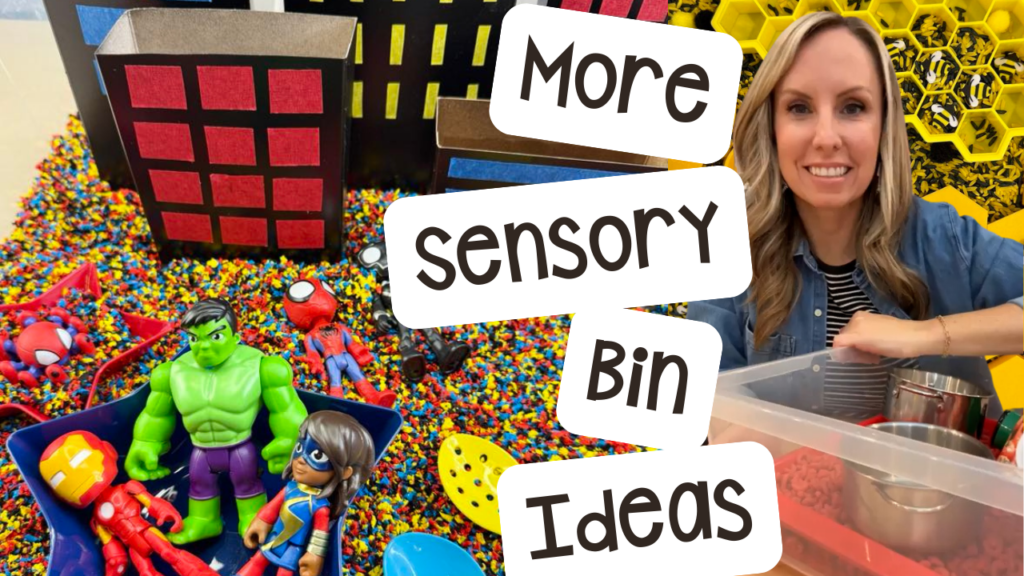
Get more sensory bin inspiration on the YouTube channel!
Love the frozen sensory play idea? Pin this image!
hey, i’m jackie!
I’m Jackie, your go-to girl for early childhood inspiration and research-based curriculum.